







International Conference On
ESG Transversality for Sustainable Water, Energy, Health & Environment Nexus
- New Delhi
- 06-07 March, 2026
Themes of International Conference 2026
Navigating Interdependencies of the Water-Energy-Health-Environment Nexus
This foundational session will deconstruct the critical interdependencies between water management, energy systems, public health, and environmental integrity, particularly in the context of escalating climate shocks and emerging health emergencies. It will explore how fragmented approaches to infrastructure planning exacerbate vulnerabilities and will spotlight integrated strategies and policy frameworks designed to enhance cross-sectoral resilience and optimise outcomes for a liveable environment. The discussion will emphasise the foundational role of the nexus approach in fostering stability and well-being.
The objective of this session is to deepen participants’ understanding of how interconnected systems shape sustainability outcomes and resilience. Through multi-stakeholder dialogue and case-driven insights, the session will explore innovative models that bridge gaps between policy, technology, and community action. It aims to provide actionable pathways for breaking down silos, advancing integrated governance, and aligning efforts toward resilient water, energy, and health systems. By the end of the session, participants will be encouraged to translate these systems-based approaches into practical solutions that safeguard both people and the planet while driving transformative change.
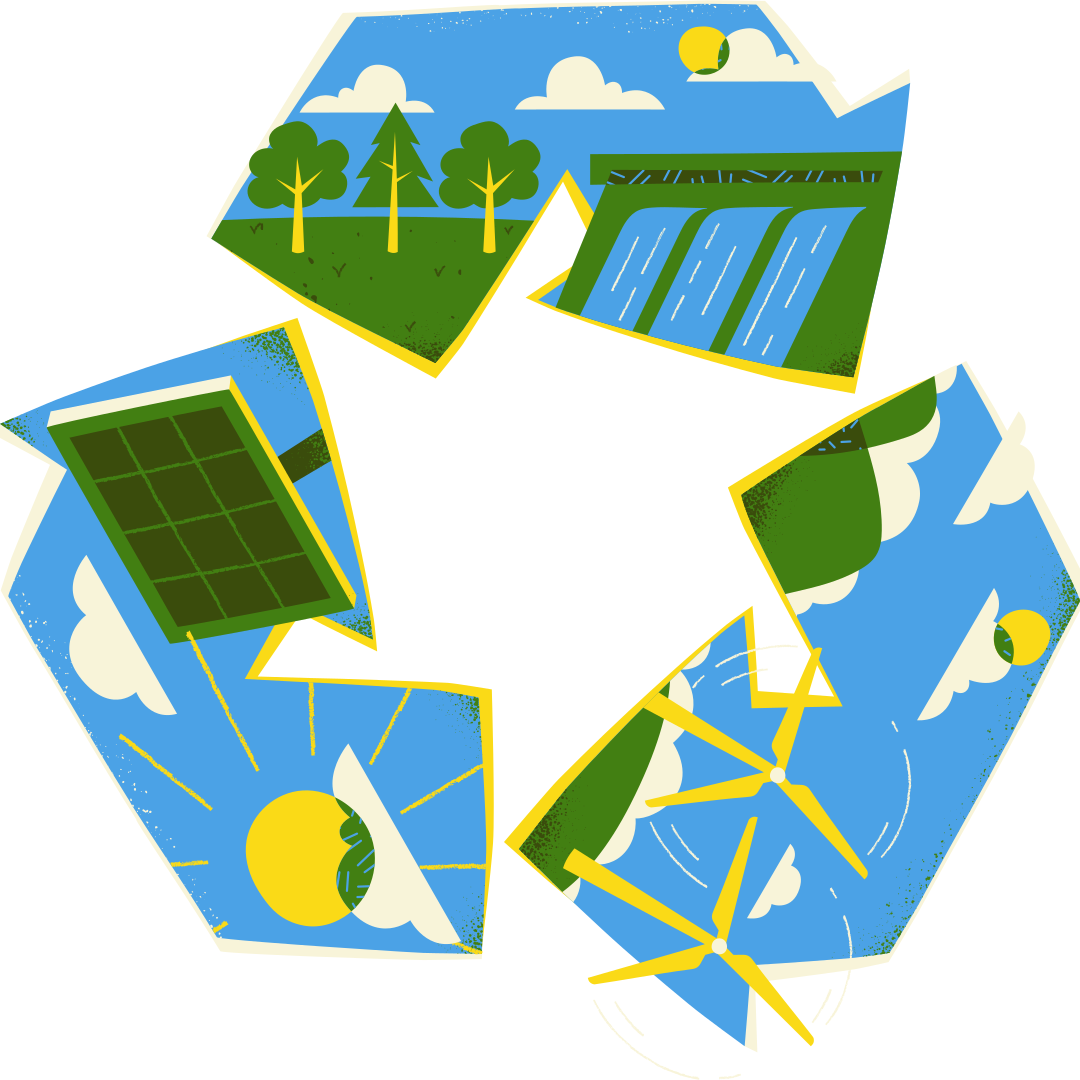
ESG-Aligned Finance & Governance to Combat Greenwashing
Ensuring the credibility and effectiveness of sustainability initiatives is paramount. This session will critically examine mechanisms designed to foster transparency and integrity in environmental, social, and governance (ESG) investments and operations. Participants will delve into robust regulatory frameworks, responsible disclosure practices, and the evolving role of accountability in shaping verifiable and impactful sustainability pathways, as well as the responsibilities of financial institutions and auditing bodies. We will explore how rigorous governance can prevent “greenwashing” and drive genuine change.
The objective of this session is to equip participants with actionable strategies to strengthen ESG credibility and drive measurable impact. Moving beyond surface-level compliance, the session will highlight innovative financial models, evolving global standards, and verification tools that ensure authenticity in ESG commitments. Participants will gain insights into the intersection of finance, governance, and ethics; understanding how transparent reporting and strong accountability mechanisms can transform ESG into a driver of real-world environmental and social outcomes. By encouraging collaboration between investors, regulators, and industry leaders, this session aims to set a roadmap for building trustworthy, future-ready financial systems that prioritize sustainability as a core value.

Cross-Sectoral Water Transversality for Accelerating Net Zero
Leadership achieving ambitious national and global de-carbonization targets necessitates a fundamental paradigm shift from fragmented efforts to genuinely collaborative governance and systems thinking. This session will underscore the power of transversality, the seamless integration across diverse sectors (e.g., transport, buildings, waste, and energy) and stakeholder groups (government, industry, community). It will explore cutting-edge models for inter-agency coordination, cross-disciplinary planning, and multi-stakeholder partnerships, which are deemed essential for accelerating the trajectory towards net-zero.
The objective of this session is to empower participants to adopt a transversal mindset that unites sectors and stakeholders under a common climate action framework. By showcasing innovative governance models, integrated planning approaches, and real-world examples of collaborative de-carbonization, the session will offer actionable tools for breaking institutional silos. It will emphasize strategies to harness cross-sectoral synergies such as linking water and energy transitions or aligning urban planning with low-carbon infrastructure to drive scalable and inclusive climate solutions. The session aims to cultivate both the vision and practical roadmaps needed for accelerating net-zero transitions, ensuring that collective action becomes the cornerstone of climate-resilient and equitable futures.

Greening Industry, Fuelling Growth via ESG Partnerships for Sustainability
This session will address how industries can not only achieve greater environmental responsibility but also significantly enhance their competitiveness and innovation. The focus will be on pioneering ESG-aligned business models, circular economy principles, and strategic public–private partnerships. Participants will examine how these collaborations can foster resource efficiency, drive technological innovation, and ensure inclusive economic growth within industrial ecosystems, thereby translating sustainability commitments into tangible market advantages and broader societal benefits.
The objective of this session is to explore how ESG-focused collaborations can transform industrial value chains into engines of both sustainability and growth. By highlighting practical pathways such as circular economy integration, low-carbon technologies, and innovative partnership models the session will equip participants with tools to move from compliance to proactive leadership. Emphasis will be placed on how industries can leverage ESG strategies to create competitive advantages, strengthen resilience, and deliver measurable environmental and social impact. Ultimately, this session seeks to inspire a new generation of industrial leadership where sustainability is not an add-on, but a catalyst for long-term, inclusive economic success.

Global Cooperation for Planetary Health Diplomacy
Recognising the indivisible link between human and planetary well-being, this culminating session advocates for unified global responses to interconnected environmental and health crises. It will explore the imperative for enhanced collaborations, effective knowledge-sharing platforms, and coherent policy frameworks. This session aims to inspire participants to consider their individual and collective roles in fostering a shared, equitable, and sustainable future on a global scale, underscoring the principles of global solidarity and unity.
The objective of this session is to strengthen global cooperation as a cornerstone of planetary health diplomacy and sustainable development. By spotlighting transformative knowledge-sharing platforms, the session will emphasize collective accountability in addressing global health-environment challenges. It will encourage participants to embrace the principle of “one earth, one health, one future,” while equipping them with insights into building enduring networks and inclusive strategies. Ultimately, this session seeks to inspire actionable diplomacy that safeguards the planet’s well-being and fosters a resilient, equitable future for all.
Call for Abstracts
We invite academic scholars, policymakers, industry leaders, and sustainability practitioners to submit abstracts (Max 200 words) aligned with the conference themes. Submissions should highlight innovative perspectives, case studies, policy frameworks, or research insights that contribute to operationalizing ESG principles across interconnected systems.
Abstract submission deadline: 28th February 2026
Abstracts must be submitted by filling out the Google Form at the following link: https://forms.gle/gZQc7QgspziEihQM6
Upon acceptance by the review committee, authors will be invited to submit full papers (4,000–5,000 words, including references) for presentation and inclusion in conference proceedings.
